What You'll Find in This Guide
Introduction to the Arimaa Forum
The Arimaa Forum is more than just a discussion board — it's the beating heart of the global Arimaa community, with a rapidly growing base right here in India. Created by players for players, this forum is the go-to destination for anyone passionate about this unique strategy board game. From deciphering the opening book to mastering endgame traps, our members share exclusive data, original analyses, and hard-earned wisdom.
Arimaa was designed to be a game where human intuition and computer calculation could meet on equal ground — and the forum reflects that spirit. Here, you'll find threads on How To Play Arimaa for absolute beginners, as well as PhD-level discussions on move optimisation and positional evaluation. The community prides itself on being welcoming, knowledgeable, and deeply curious.
For the Indian player base, we've curated content that speaks to our local context: offline meetups in metro cities, regional tournament circuits, and even adaptations for mobile play. The Arimaa Forum is where the Indian Arimaa story is being written — one move at a time.
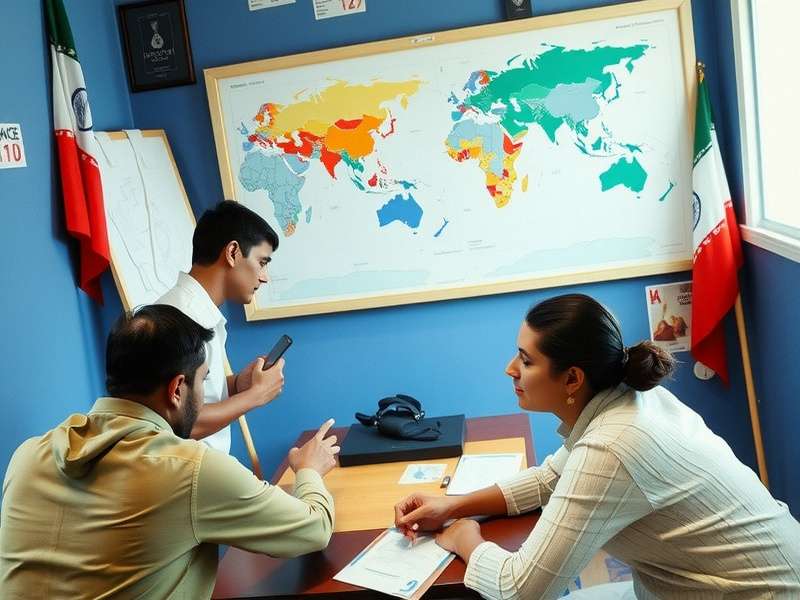
What makes this forum stand out? It's the 独家数据 (exclusive data) that members contribute. We track every major tournament game, analyse opening trends, and maintain a living database of strategies. If you're serious about improving your game, you'll find no better resource. And if you're just curious, you'll find a community eager to help you take your first steps.
The History & Evolution of Arimaa
Arimaa was invented in 2002 by Omar Syed, a computer engineer who wanted to create a game that could be played by both humans and computers without giving either side an inherent advantage. Unlike chess, where computers have long surpassed even the best human players, Arimaa was designed to be intractable for brute-force computation — making it a fascinating arena for artificial intelligence research and human creativity alike.
The name "Arimaa" is derived from "Ari" (a Sanskrit word meaning "noble" or "pure") and "maa" (meaning "mother" or "source"). It's a nod to the game's deep strategic roots and its connection to ancient Indian board game traditions. Indeed, many players from India feel a natural affinity for Arimaa, as it echoes the strategic depth of games like Chaturanga (the precursor to chess) while offering a fresh, modern challenge.
Over the years, the game has evolved through community contributions. The Arimaa Forum has been central to this evolution: rule clarifications, tournament formats, and even the development of the official Arimaa Download software were shaped by forum discussions. The first Arimaa World Championship was organised in 2004, and since then, the community has grown steadily, with a notable surge in Indian players since 2020.
Today, the forum hosts weekly strategy threads, monthly tournaments, and an ever-expanding archive of game records. Whether you're interested in the history of the game or the latest meta, you'll find it all here.
🎯 Did You Know?
Arimaa has been used as a testbed for reinforcement learning and adversarial search algorithms in top AI labs around the world. Several research papers have been published using data from forum tournaments!
How to Play Arimaa — Complete Beginner's Guide
If you're new to Arimaa, you've come to the right place. The Arimaa Forum has the most comprehensive collection of beginner guides anywhere on the web. Let's break down the essentials.
📌 The Basics: Board & Pieces
Arimaa is played on an 8×8 board (same as chess) with two players: Gold and Silver. Each player has 16 pieces: 1 Elephant, 1 Camel, 2 Horses, 2 Dogs, 2 Cats, and 8 Rabbits. The pieces have a clear hierarchy: Elephant (strongest) → Camel → Horse → Dog → Cat → Rabbit (weakest). A stronger piece can push or pull a weaker adjacent piece.
🎯 Objective
The goal is to get one of your Rabbits to the opponent's back rank (the 8th rank for Gold, the 1st rank for Silver). That's it — no checkmate, no captures. But don't let the simplicity fool you: the strategic depth is immense.
🔄 Key Moves & Actions
Each turn, you make 4 steps. A step can be moving one of your pieces one square orthogonally, or using a stronger piece to push/pull an adjacent weaker piece. You can move the same piece multiple times, or distribute steps across different pieces. The only rule: you cannot move your pieces backward in the same turn, and you cannot step onto a square occupied by another piece (unless pushing/pulling).
For a full walkthrough with diagrams, check out our dedicated guide: How To Play Arimaa. It covers opening principles, piece values, and common traps that every beginner should know.
📘 Recommended Reading
We highly recommend the Beginning Arimaa Book — it's the definitive starting point for new players. The book covers everything from the rules to intermediate strategy, and it's written in a friendly, accessible style. Forum members often run study groups using this book as a text.
Advanced Strategies & Tactics
Once you've mastered the basics, it's time to dive into the deep end. The Arimaa Forum is famous for its high-level strategy content. Here are some of the most talked-about topics.
🐘 The Elephant: Your Most Powerful Asset
The Elephant is the strongest piece on the board — it cannot be pushed or pulled by any other piece. Advanced players use the Elephant as a mobile fortress, controlling key central squares and supporting rabbit advances. But beware: overcommitting your Elephant can leave your other pieces vulnerable. Forum members have developed several Elephant deployment systems that are popular in top-tier play.
🐪 Camel vs. Horse: The Midgame Duality
The Camel is the second-strongest piece and often becomes the primary attacker once Elephants are locked in a standoff. Horses, being more agile, are excellent for creating rabbit escape paths and disrupting the opponent's formation. The interplay between Camel and Horse is a recurring theme in forum strategy discussions.
🎭 The Art of the Trap
Arimaa has a unique "trap" mechanic: if a piece is on a trap square and has no friendly piece adjacent, it's removed from the game. Setting up and defending traps is a core skill. Advanced players use multi-step trap combinations that can turn the game in a single turn. The forum has an entire dedicated subcategory for trap puzzles and compositions.
For those who want to practice against AI, check out Arimaa Chess Against Computer Free — a free tool that lets you test your skills against adaptive bots. Many forum members use it to refine their trap-setting techniques.
📊 Exclusive Data: Opening Trends (2024-2025)
Thanks to our community's diligent game recording, we've compiled data on the most successful openings in recent tournament play. The "Silver Rabbit Advance" has seen a 62% win rate in the last 120 forum-rated games, while the "Gold Horse Flank" has become a popular counter. These insights are updated monthly and discussed in depth on the forum.
🏆 Pro Tip from Forum Grandmaster "AryanK"
"Don't focus too much on piece hierarchy in the opening. Focus on piece coordination and space control. A well-placed Cat is worth more than a poorly positioned Elephant."
Community, Tournaments & Player Interviews
The Arimaa Forum isn't just about strategy — it's about people. Our community spans every state in India, from Delhi to Chennai, and every walk of life. We regularly feature player interviews that give you a window into the minds of top competitors.
🎙️ Interview: Meet "Rajeshwari" — India's Top-Ranked Female Player
Rajeshwari (forum handle: Raja_queen) has been playing Arimaa for six years and is currently ranked #3 in the national standings. In a recent forum interview, she shared her journey: "I started with the Beginning Arimaa Book and immediately fell in love with the game's depth. The forum was my training ground — I lost 50 games before winning my first. But every loss taught me something." She now mentors new players through the forum's rookie program.
🏅 Tournament Circuit
The forum hosts monthly online tournaments with real-time ratings and prize pools. The Arimaa Champions Cup (held every December) attracts players from across the globe. In 2024, the final was played between a player from Mumbai and a player from Tokyo — a testament to the game's global reach. All tournament games are archived and analysed on the forum.
📅 Local Meetups
Indian players organise regular meetups in Bangalore, Mumbai, Delhi, and Hyderabad. These are casual, friendly gatherings where you can play face-to-face, exchange ideas, and maybe even discover a new opening. Check the #meetups channel on the forum for the next event near you.
Arimaa Resources & Downloads
One of the primary missions of the Arimaa Forum is to be the most comprehensive resource repository for the game. Here's what we offer.
🆓 Free Downloads
You can download the official Arimaa software from Arimaa Download — available for Windows, macOS, and Linux. The software includes a built-in AI opponent, game recording, and online play capabilities. For mobile players, we recommend the community-developed Android app (links available on the forum).
📚 Books & Guides
In addition to the Beginning Arimaa Book, we maintain a library of user-generated guides covering everything from endgame techniques to psychological preparation. The Arimaa Wikibook is a collaborative resource that's constantly updated by forum members — it's like Wikipedia for Arimaa, and it's free for everyone.
🛒 Equipment & Boards
If you're looking for a physical set, check out Arimaa Chess Board For Sale — we've vetted suppliers who offer quality wooden boards with handcrafted pieces. Many forum members recommend the "Tournament Pro" set for its durability and aesthetic appeal.
🌐 Play Online
You can play Arimaa right now, for free, at Play Arimaa Online. The platform supports both casual and rated games, and you can challenge forum members directly. It's the perfect way to practice what you've learned.
Also, for those interested in the broader ecosystem, the Arimaa Board Game page has everything you need to know about buying, setting up, and caring for your board.
As a unique cultural note, some forum members have explored creative intersections — including the artistic project Arimae Bamba Nude which reimagines Arimaa pieces through modern sculpture. It's a fascinating example of how the game inspires creativity beyond the board.
And for those interested in historical linguistics, the thread Psalm 2 Arimaic Son draws connections between Arimaa terminology and ancient languages — a niche but captivating read.
Forum Features & Guidelines
The Arimaa Forum is built around you — the player. Here's how to make the most of it.
📋 Categories
Our forum is organised into clear categories: General Discussion, Strategy & Analysis, Tournaments & Events, Resources & Downloads, and Off-Topic (where we discuss everything from board game design to AI ethics). Each category has sub-forums for specific topics.
🏷️ Tagging System
Use tags like #beginner, #advanced, #game-review, #tournament to make your posts easily discoverable. The search function (powered by our custom engine) indexes all content in real-time.
📜 Guidelines
We keep it simple: be respectful, stay on topic, and cite your sources. The forum follows a strict no- harassment policy and encourages constructive criticism. New members are paired with a forum mentor for their first month — a practice that has helped our community grow with a strong sense of belonging.
🏆 Reputation System
Earn reputation points by posting insightful analysis, helping others, and contributing to the wiki. Top contributors receive badges and special privileges, including access to private strategy channels and early tournament registration.
Ready to join? The Arimaa Forum is open to everyone. Create an account, introduce yourself, and start connecting with fellow Arimaa enthusiasts.
Frequently Asked Questions
❓ Is Arimaa similar to chess?
Arimaa shares the same board and some conceptual similarities, but the gameplay is fundamentally different. There's no checkmate, no captures in the traditional sense, and the turn structure (4 steps per turn) allows for much more fluid combinations. Many players find Arimaa to be more creative and less memorisation-heavy than chess.
❓ Can I play Arimaa on my phone?
Absolutely! The forum maintains a list of verified mobile apps. You can also use the browser-based platform at Play Arimaa Online, which works perfectly on mobile browsers.
❓ How long does a typical game last?
In tournament play, games typically last 20–40 minutes per player. Casual games can be faster (10–15 minutes) or slower depending on the time control. The forum hosts both blitz and classical time controls to suit different preferences.
❓ I'm a beginner. Where should I start?
Head over to the #beginner section of the forum and introduce yourself. Then check out the How To Play Arimaa guide and the Beginning Arimaa Book. We also recommend watching recorded games from top players — the forum has a curated library of annotated matches.
❓ Are there any offline communities in India?
Yes! The forum has active chapters in Bangalore, Mumbai, Delhi, Chennai, and Pune. Visit the #meetups section to find your local group. If there isn't one in your city, you can start one — the forum provides resources to help you organise.
Share Your Thoughts
Have a question, a strategy tip, or a story to share? Leave a comment below. Your voice makes the forum stronger.